ChatGPT Is Not Your Therapist: What AI Can't Replace About Real Therapy | House of Wellness
By Paula Vescio, RSW, MSW
ChatGPT Is Not Your Therapist
ChatGPT is great and all—but it's not your therapist. On the surface, they can sound pretty similar. Both can reflect, and both can validate. ChatGPT can even offer some genuinely good insight, too. But, therapy is not just about what's being said, It's about what happens between two people.
You can hear really similar words from both. "I'm so sorry that's happening to you. Your feelings are valid." And those words can land in a comforting way. But a therapist isn't just there to comfort you.
What a Therapist Does That ChatGPT Can't
A therapist is there to notice the patterns you might be missing, to gently challenge you when it's needed, and to help you actually move through something—not just talk about it.
There's a significant difference between those two things. Talking about something can bring relief. Moving through something creates change. And the path from one to the other requires more than words on a screen.
Therapy Is About What Happens Between Two People
A therapist notices you, your tone, your pauses, and the shifts that happen in your body when a certain topic comes up. We notice what you seem to avoid, what you circle back to without realizing it, what speeds up and what goes quiet.
ChatGPT responds to what you type. A therapist responds to all of it, including the things you don't say. That's not a small distinction. That's the whole thing!
When you sit with a therapist, you're letting someone actually see you. Maybe in ways you're not used to. Maybe in ways you've never experienced before. And that experience—being genuinely seen by another human being—is exactly what creates change.
Why Being Understood Isn't Always Enough
AI has gotten remarkably good at making people feel understood. It reflects your words back clearly, validates your experience, and organizes your thoughts in a way that feels helpful. For a lot of people, that's been a meaningful starting point.
But change doesn't just come from being understood. An AI tool has largely mastered that part. What it can't replicate is what happens when someone gently calls you in. When they sit with you in the hard moments. When they stay there long enough for something to actually shift.
That kind of presence requires a human being. It requires a relationship built over time, where trust deepens, where patterns become visible, and where the experience of being consistently met by another person starts to do something to the way you see yourself.
The Difference Between Comfort and Change
Comfort and change are not the same thing. Comfort says, "You're okay. What you're feeling makes sense." Change says, "I notice you do this thing. Let's look at it together."
Both matter. But if you've been feeling stuck—if the same patterns keep showing up in your relationships, your reactions, your thoughts—comfort alone won't move you forward. You need someone who can see the pattern from the outside and help you understand it from the inside.
That's what therapy offers. Not just a space to feel heard, but a space to actually grow.
You Deserve More Than Validation
If you've been using AI to process what you're going through, that's okay. It might have helped you find language for something that felt hard to name. But if you're ready for more than validation—if you want to actually move through something instead of just talk about it—therapy is the next step.
At House of Wellness Therapies, we offer real, human, relational therapy. The kind where you're gently challenged to grow and where you don't have to carry it alone.
We offer complimentary consultations so you can explore what support might feel right for you. If you're in Toronto, Ottawa, Hamilton, London, Vaughan, Woodbridge, Richmond Hill, Mississauga, Brampton, or Windsor, we'd love to connect with you.
Change happens when someone sits with you in the hard moments and stays there long enough for something to shift. That's what we're here for.
Ready to experience real therapy? Book your free consultation today and take the first step toward being truly seen.
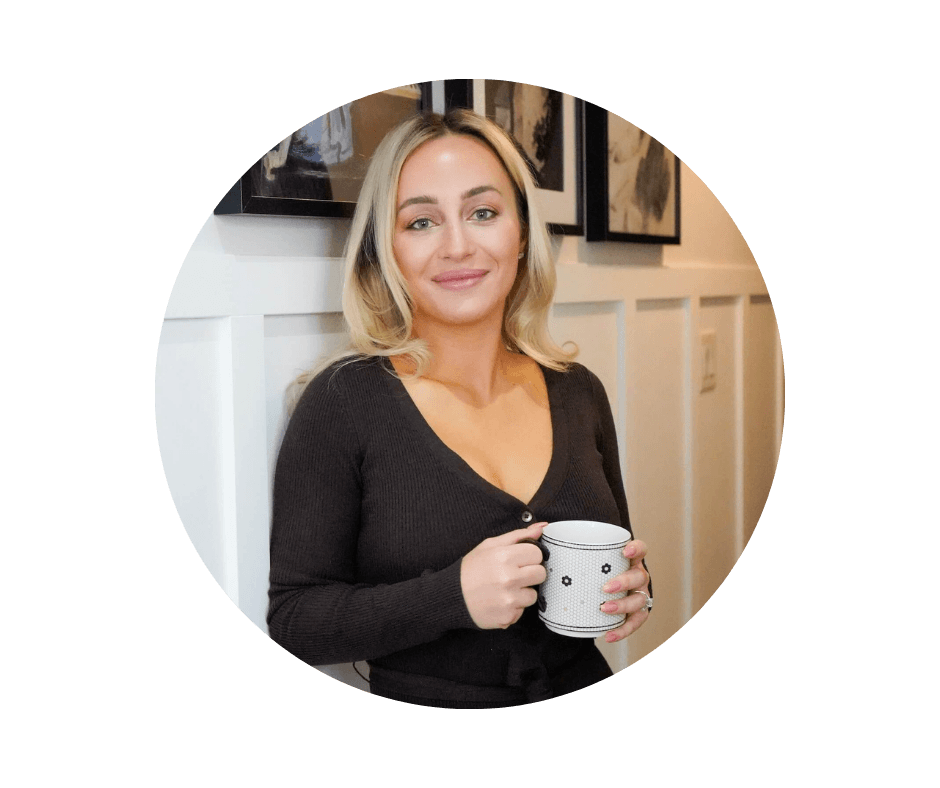
Paula Vescio, MSW, RSW
Is the founder and clinical director of House of Wellness Therapies. A warm, relatable therapist specializing in individual, couples, and family therapy, she combines evidence-based approaches (CBT, EFT, Gottman Method, mindfulness, and trauma-informed care) with genuine compassion to help clients navigate anxiety, relationships, parenthood, and life transitions in a safe, judgment-free space.