The Food-Mood Connection: How Nutrition Supports Your Emotional Wellbeing
By Paula Vescio, RSW, MSW
You wake up irritable. No clear reason. Just… off. By afternoon, you're moving through a fog. Can't focus, can't think straight. Maybe you snapped at someone you love, or, you're feeling more anxious than usual, and you can't quite sort out why.
You're not imagining it, and you're definitely not alone.
So many of us feel this way! Stretched thin, emotionally reactive, and unlike ourselves without understanding what's happening beneath the surface. We look for psychological explanations. Is it stress at work? Relationship tension? Unresolved trauma?. And yes, those things matter deeply, but, there's another piece of the puzzle we often overlook: What we're eating
Your Body and Mind Are Always Talking
Food and mood are more connected than most people realize. When your body is undernourished, overwhelmed, or out of balance, your emotional world feels it. Our minds and bodies are always in conversation.
What you eat doesn't determine your emotions, and food isn't a cure for depression or anxiety or trauma. But, it can set the stage for how well you regulate, cope, and respond.
Think of your brain as an organ that needs fuel like specific nutrients to produce the chemicals that influence mood, to manage stress hormones, to maintain the pathways that help you think clearly and feel balanced.
When your body doesn't get what it needs, it's like running a marathon on empty. You might push through for a while, but eventually something gives. That "something" often shows up as irritability, brain fog, emotional reactivity and a general sense of feeling unlike yourself.
The mind-body connection isn't just a wellness buzzword. It's biology. Understanding it can be incredibly empowering when you've been feeling stretched thin.
The Blood Sugar Rollercoaster You Didn't Sign Up For
So, what is one of the most immediate ways food affects mood? Blood sugar. When you eat, your body breaks down carbohydrates into glucose. That glucose enters your bloodstream and gives you energy. Your pancreas releases insulin to keep everything balanced.
But, when you eat foods that spike your blood sugar like sugary snacks, refined carbs, or when you skip meals altogether, your body responds with a surge of insulin. That surge brings your blood sugar crashing down, and suddenly you're dealing with irritability, anxiety, difficulty focusing and a drop in emotional resilience.
That mid-afternoon slump, the shakiness before lunch, the sudden wave of overwhelm that seems to come out of nowhere… These can all be signs your blood sugar is on a rollercoaster.
The good news is that balanced meals help keep your glucose steady throughout the day. Things like protein, healthy fats, complex carbohydrates can support this. When your blood sugar is stable, your moods tend to be steadier, too. You're more equipped to handle stress, to think clearly and respond to challenges without feeling constantly on edge.
Your Gut Is Talking to Your Brain
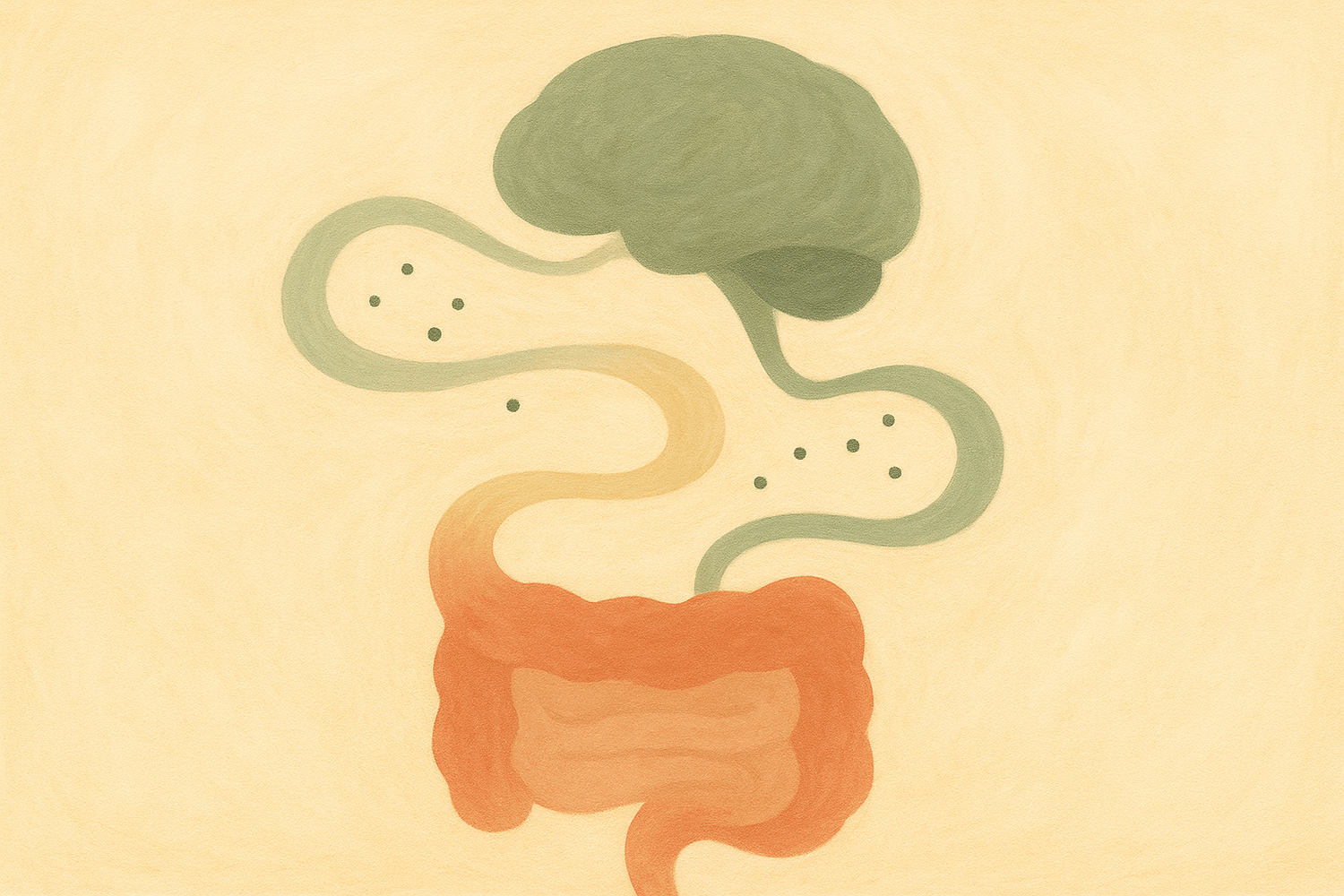
Your gut produces up to 90% of your body's serotonin. That “feel-good chemical” everyone talks about is being made in your digestive system. Your gut is home to trillions of microorganisms. They produce neurotransmitters, they regulate inflammation, and they communicate directly with your brain through what scientists call the gut-brain axis.
When your gut is nourished and balanced, it supports emotional regulation, better sleep, improved stress tolerance and greater resilience.
But, when your gut microbiome is disrupted, from chronic stress, antibiotics, poor diet, it can contribute to anxiety, depression, and emotional dysregulation...
It's Not About Perfection
Food is one piece of the mental health puzzle. It won't replace therapy or necessary medication or the other supports you might need. But, it can absolutely support your daily mood stability, your energy levels and your emotional resilience.
You don't need to overhaul your entire diet overnight and you don't need to eat "perfectly" or follow the latest wellness trend.
What matters is meeting your body and mind where they are, and making small, sustainable changes that feel supportive rather than overwhelming. We’re here to help with this.
You're Allowed to Ask for Support
At House of Wellness Therapies, we understand that mental health and physical health aren't separate. They're deeply interconnected. That's why our team includes both licensed therapists and a registered dietitian, who work together to support your emotional and physical wellbeing.
Whether you're struggling with anxiety, depression, emotional eating, or just feeling like something's not quite right, we're here to help you explore what's going on beneath the surface. We offer complimentary consultations so you can ask questions, explore your wellness goals and see what kind of support would genuinely help.
Whether you’re in Toronto, Vaughan, the GTA, Ottawa, Hamilton, London, Kawartha Lakes, or anywhere in Ontario, we'd love to connect with you.
Our approach is warm, collaborative, and rooted in the belief that therapy should meet you where you are, not where you think you "should" be.
You deserve to feel like yourself again. Let's figure out what that looks like, together.
Ready to take the first step?
Book your free consultation today and discover how nutrition and therapy can work together to support your mental wellness.

Paula Vescio, MSW, RSW
Is the founder and clinical director of House of Wellness Therapies. A warm, relatable therapist specializing in individual, couples, and family therapy, she combines evidence-based approaches (CBT, EFT, Gottman Method, mindfulness, and trauma-informed care) with genuine compassion to help clients navigate anxiety, relationships, parenthood, and life transitions in a safe, judgment-free space.